
A complete worship service record goes far beyond a headcount. Pastors and administrators should capture the sermon topic and series, first-time guest count, decisions for Christ, weather and seasonal conditions, any competing local events, parking and capacity observations, and online or streaming attendance. Over time, this context can transform simple numbers into a meaningful story that reveals true ministry momentum.
Why Church Attendance Numbers Alone Can Be Misleading
The same number can mean very different things depending on the day. Without context, data is easily misinterpreted. 750 people on a holiday Sunday (like Easter or Mother’s Day) vs. 750 people on a “normal” week in July represents two completely different levels of engagement. A 20% dip in attendance during a winter freeze isn’t a sign of a declining church. It’s a result of inclement weather. Noting this across a few weeks in February will reduce wrong assumptions about a sermon series.
Recording the “why” alongside the “what” allows leadership teams to make better long-range decisions. Context turns raw data into actionable ministry insight.
What should your church track beyond just the headcount?
- Sermon Series and Topic: Track sermon topics over time to see which ones resonate most with your community and result in higher engagement. It’s also helpful to know which topics have a higher online audience.
- Attendance by Specific Service: Don’t just record a single total. Knowing the “weight” of your 9:00 AM vs. your 11:00 AM service is critical for facility and volunteer planning.
- Spiritual Decisions: Record markers that aren’t just bodies in seats, such as salvations, baptisms, rededications, and ministry sign-ups.
- Weather and Seasonality: Note the weather. Were the streets and sidewalks frozen over? Did a thunderstorm or the first beautiful spring day affect turnout?
- Special Events or Conflicts: Note major holidays, local school breaks, youth sports tournaments, or city-wide events that are likely to pull people away.
- Logistics and Capacity Notes: Was the parking lot at its limit? Was the lobby congested between services? This is your early warning system for future facility expansion.
- Digital Reach: Include your online viewership or livestream count for a complete picture of your total weekly reach.
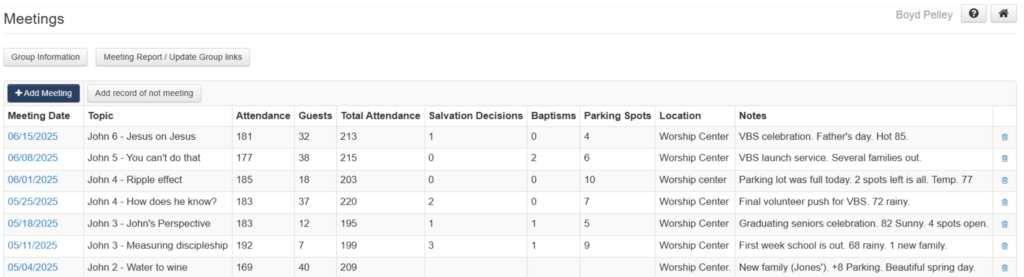
You can track the items you choose with custom options in Churchteams. You’ll end up with a dashboard of information to help you plan for the future.
How to Build a Simple Service Tracking Process
The secret to great data is consistency. You don’t need a complex system. You just need an easy, repeatable process within your Church Management Software (ChMS). Churchteams has an attendance-tracking feature that lets you add custom fields to gain the best insight.
1. Designate a “Worship Reporter” (or create a team that alternates this role).
Assign a specific staff member or volunteer to be responsible for the “Sunday Service Record.” Make them a Leader in your Worship Group so that they can access the attendance reports for that group. Using the app, they can record the data for the fields that they are tracking and add variable notes.
2. Log the information immediately.
Data is most accurate when it’s fresh. Your staff member or volunteer should aim to record the information as the worship service begins or ends. Consider this their serving role during the service.
3. Take advantage of Notes.
Churchteams allows you to add specific notes alongside attendance figures. This is the perfect place to drop a quick sentence about a guest speaker, a local power outage, or a community-wide event.
Turn a Year of Insights Into Your Planning Advantage
Once you have a year of contextual data, you can stop guessing and start planning with confidence.
- Spotting Patterns: Are there specific sermon topics that always drive higher engagement? Use that data to go deeper with the series for the year ahead.
- Year-Over-Year Comparison: When comparing this year’s “Fall Kickoff” to last year’s, ensure you’re comparing apples to apples by checking the weather and local events from the previous record.
- Evaluating Evangelism: By tracking decisions and sign-ups alongside attendance, you can evaluate the actual effectiveness of your outreach efforts rather than just the vibes in the room.
Make Every Sunday Count
A complete worship service record transforms raw numbers into a meaningful story. If you’re ready to start tracking the context that matters, Churchteams is built to help you capture every detail—from the sermon title to the parking lot capacity.
See how Churchteams handles service records with a quick demo.
